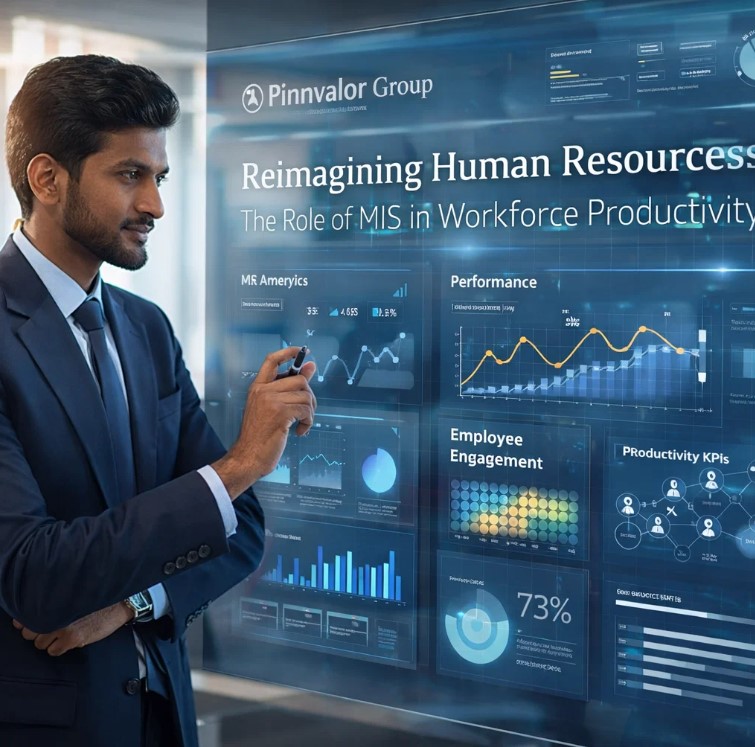
Reimagining Human Resources: The Role of MIS in Workforce Productivity Analytics
In today’s knowledge-driven economy, people are no longer viewed merely as resources—they are strategic assets. As organizations navigate hybrid work models, skill shortages, and rising performance expectations, traditional HR practices are proving insufficient. This shift has elevated the role of Management Information Systems (MIS) in Human Resources, transforming HR from an administrative function into a data-driven strategic partner.
Is your organization using workforce data merely to report—or to lead?
The future of HR lies not in reports, but in predictive insights that align people with purpose, performance, and progress.
At the heart of this transformation lies Workforce Productivity Analytics—the ability to measure, analyze, and optimize how people contribute to organizational outcomes. MIS acts as the backbone that enables this analytical capability.
The Evolution of HR: From Administration to Analytics
Historically, HR departments focused on transactional activities such as payroll processing, attendance tracking, and compliance reporting. While necessary, these functions offered limited insight into workforce effectiveness or future readiness.
Modern HR is expected to answer strategic questions such as:
- Which teams drive the highest productivity?
- What skills gaps threaten future growth?
- How does employee engagement impact business performance?
- Where are attrition risks emerging?
MIS empowers HR leaders to move beyond intuition and anecdotal evidence by delivering real-time, reliable, and actionable data.
Understanding MIS in the HR Context
A Human Resource MIS integrates data from multiple HR functions—recruitment, performance management, learning & development, compensation, and employee engagement—into a unified reporting and analytics framework.
Key Characteristics of an Effective HR MIS
- Centralized data architecture
- Standardized metrics and dashboards
- Automated reporting
- Analytical and predictive capabilities
- Integration with finance and operations systems
This integration ensures that workforce insights are aligned with broader organizational goals.
Workforce Productivity Analytics: What It Really Means
Workforce productivity analytics goes beyond measuring hours worked or output per employee. It focuses on understanding how efficiently and effectively human capital is deployed.
MIS enables HR teams to analyze:
- Employee performance trends
- Utilization and capacity metrics
- Skill-to-role alignment
- Learning ROI and skill progression
- Engagement and absenteeism patterns
- Attrition drivers and retention risks
By correlating these metrics with business outcomes such as revenue growth, project delivery timelines, and customer satisfaction, organizations gain a holistic view of productivity.
Key MIS-Driven HR Analytics Use Cases
1. Performance Management and Goal Alignment
MIS-based dashboards allow HR and leadership to track performance at individual, team, and departmental levels. KPIs can be linked directly to organizational objectives, ensuring strategic alignment and transparency.
2. Talent Acquisition Effectiveness
Recruitment analytics powered by MIS help assess time-to-hire, cost-per-hire, source quality, and onboarding effectiveness—enabling smarter hiring decisions.
3. Learning & Development ROI
By integrating training data with performance outcomes, MIS helps evaluate whether learning initiatives are actually improving productivity and closing skill gaps.
4. Attrition and Retention Analytics
Predictive models within MIS can identify early warning signs of employee disengagement, allowing proactive retention strategies.
5. Workforce Planning and Forecasting
MIS supports scenario modeling to anticipate future talent needs based on business growth plans, automation, and market changes.
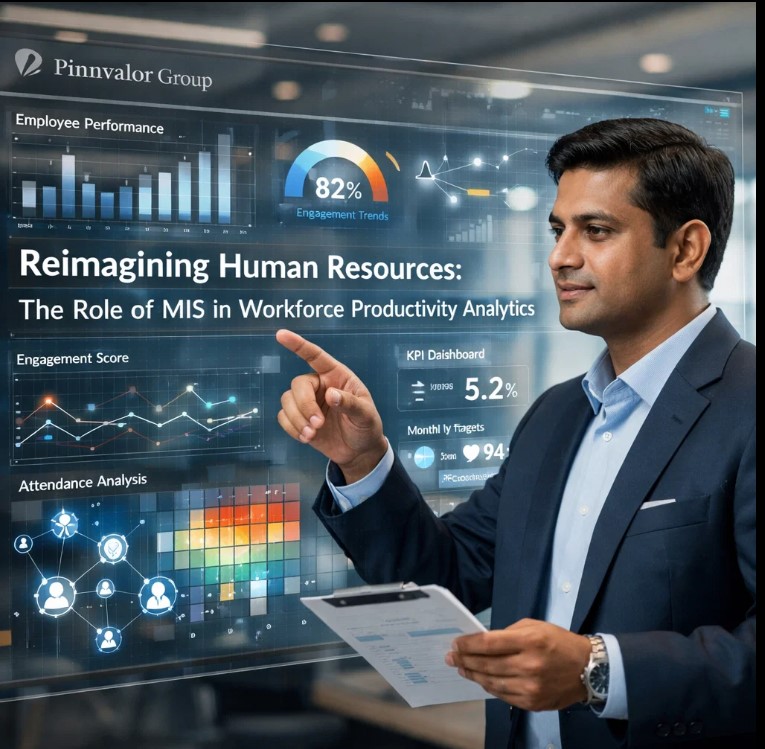
Strategic Benefits of MIS in HR
- Data-driven decision-making: Reduces bias and improves credibility of HR recommendations.
- Improved productivity: Identifies bottlenecks, inefficiencies, and high-performing teams.
- Cost optimization: Aligns compensation, training, and hiring spend with measurable outcomes.
- Enhanced employee experience: Enables personalized development and engagement initiatives.
- Stronger governance and compliance: Ensures audit-ready HR reporting and controls.
Challenges in Implementing HR MIS Analytics
Despite its benefits, implementing MIS in HR is not without challenges.
- Poor data quality or fragmented systems
- Resistance to change within HR teams
- Over-reliance on reports without interpretation
- Lack of analytical skills within HR functions
Addressing these challenges requires leadership commitment, clear data governance, and upskilling HR professionals in analytics and business interpretation.
The Future of HR: Predictive and Prescriptive Analytics
The next phase of HR MIS lies in AI-powered predictive and prescriptive analytics. Instead of asking “what happened?”, organizations will increasingly ask:
- What is likely to happen next?
- What actions should we take to improve outcomes?
MIS will play a central role in enabling intelligent workforce decisions—helping organizations design agile, resilient, and high-performing teams.
Conclusion
Reimagining Human Resources is no longer optional—it is a strategic necessity. MIS serves as the foundation for workforce productivity analytics, enabling HR leaders to connect people data with business value.
Organizations that successfully leverage MIS in HR will gain a decisive advantage: a workforce that is not only productive, but purposefully aligned with long-term growth and innovation.