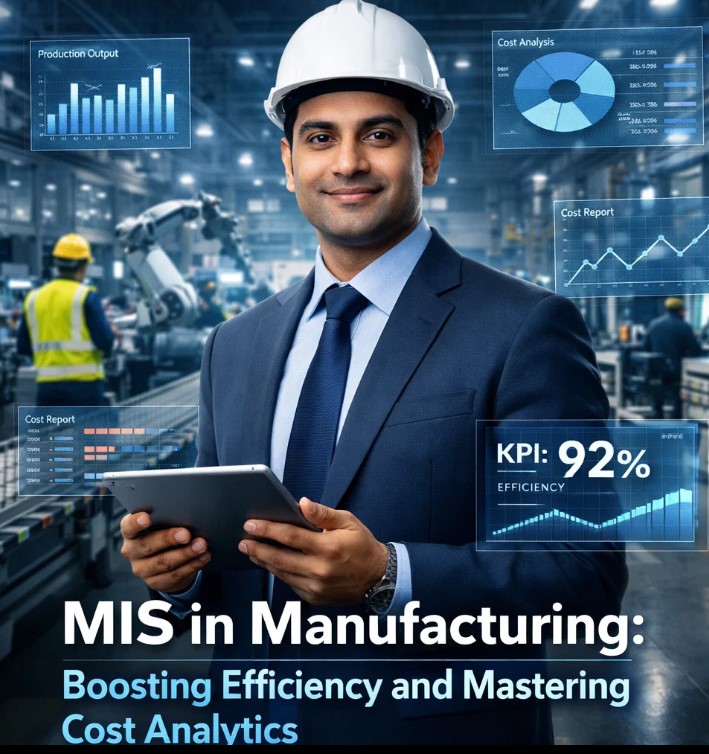
MIS in Manufacturing: Boosting Efficiency and Mastering Cost Analytics
In today’s highly competitive manufacturing landscape, operational efficiency and cost control are no longer optional—they are strategic imperatives. Manufacturers are under constant pressure to optimize production processes, reduce waste, and improve profitability while maintaining quality and meeting dynamic customer demands.
How much profit are you losing due to unseen production inefficiencies?
Efficiency is no longer about working harder, but working smarter with real-time insights. MIS empowers manufacturers to eliminate inefficiencies before they impact performance.
This is where Management Information Systems (MIS) play a transformative role. By converting raw data into actionable insights, MIS empowers manufacturers to streamline operations, enhance productivity, and gain granular visibility into cost structures.
Understanding MIS in Manufacturing
A Management Information System (MIS) in manufacturing is a structured framework that collects, processes, and analyzes data across production, inventory, procurement, and finance functions.
It integrates information from multiple touchpoints such as:
- Production lines
- Supply chain operations
- Inventory systems
- Financial records
The result is a centralized system that enables real-time decision-making and performance monitoring.
Driving Production Efficiency through MIS
1. Real-Time Production Monitoring
MIS enables manufacturers to track production activities as they happen. From machine performance to output levels, managers can quickly identify bottlenecks and inefficiencies.
- Reduced downtime
- Faster issue resolution
- Improved production throughput
2. Workflow Optimization
By analyzing historical and real-time data, MIS identifies process gaps and redundancies in the production cycle.
- Streamlined workflows
- Better resource allocation
- Enhanced coordination across departments
3. Predictive Maintenance
MIS integrates with machine data to predict potential equipment failures before they occur.
- Lower maintenance costs
- Reduced unplanned downtime
- Extended asset lifespan
4. Inventory and Material Management
Efficient production depends heavily on optimal inventory levels. MIS ensures that raw materials and components are available when needed without overstocking.
- Reduced carrying costs
- Minimized stockouts
- Improved production continuity
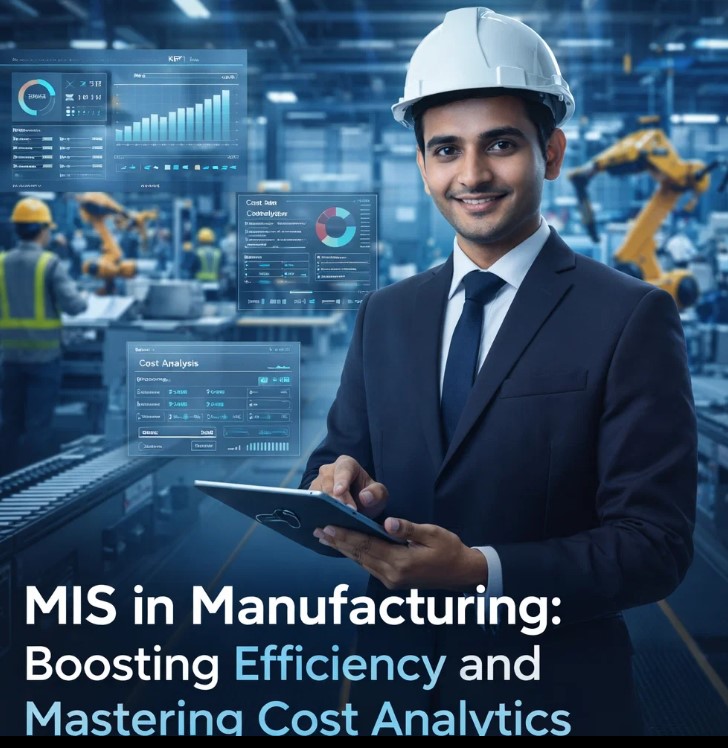
Mastering Cost Analytics with MIS
1. Detailed Cost Tracking
MIS provides a breakdown of costs across raw materials, labor, overheads, and machine usage. This level of granularity helps organizations understand where money is being spent and why.
2. Variance Analysis
By comparing actual costs with standard or budgeted costs, MIS highlights deviations and inefficiencies.
- Identification of cost overruns
- Root cause analysis
- Better budgeting and forecasting
3. Profitability Analysis
MIS enables manufacturers to evaluate profitability at multiple levels:
- Product-wise
- Batch-wise
- Customer-wise
- Focus on high-margin products
- Strategic pricing decisions
- Elimination of loss-making operations
4. Cost Optimization Strategies
With actionable insights, MIS supports data-driven strategies such as process re-engineering, supplier optimization, and waste reduction initiatives.
Integration with Advanced Technologies
Modern MIS systems are increasingly integrated with:
- IoT (Internet of Things): For real-time machine data
- AI & Machine Learning: For predictive analytics
- ERP Systems: For end-to-end business integration
This integration enhances the system’s ability to deliver intelligent, automated, and forward-looking insights.
Challenges in Implementing MIS
- High initial implementation costs
- Data integration complexities
- Resistance to change within the workforce
- Requirement for skilled personnel
Solution: A phased implementation approach combined with proper training and change management can significantly mitigate these challenges.
Best Practices for Effective MIS Utilization
- Ensure data accuracy and consistency
- Define clear KPIs and performance metrics
- Regularly update and maintain the system
- Train employees to interpret and act on insights
- Align MIS outputs with strategic business goals
Conclusion
MIS is no longer just a reporting tool—it is a strategic enabler for manufacturing excellence. By providing real-time visibility into production processes and cost structures, MIS empowers organizations to make informed decisions, improve efficiency, and enhance profitability.
In an era where margins are tight and competition is fierce, leveraging MIS effectively can be the difference between operational survival and sustainable growth.
Final Thought
Manufacturers that embrace MIS not only gain control over their operations but also unlock the potential to transform data into a powerful competitive advantage.