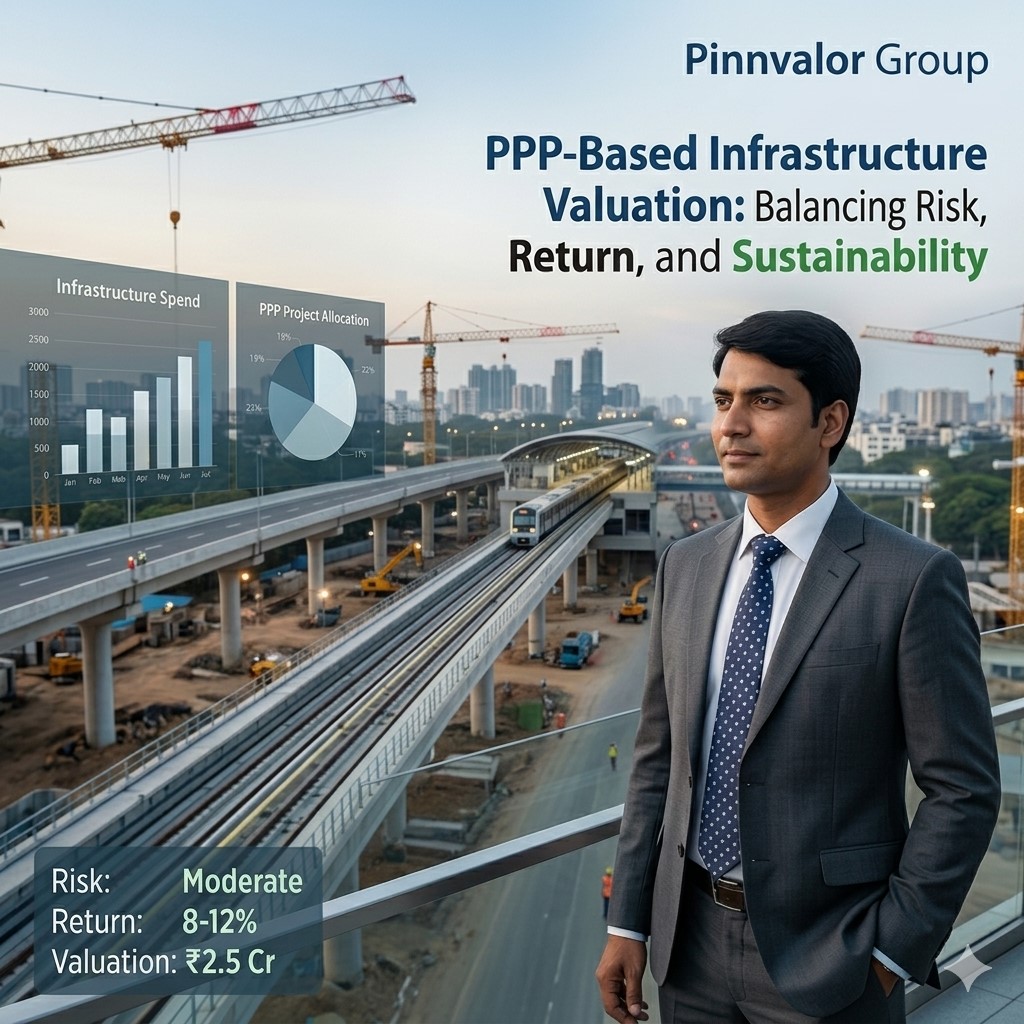
PPP-Based Infrastructure Valuation: Balancing Risk, Return, and Sustainability
Infrastructure development plays a vital role in driving economic growth, improving connectivity, and enhancing quality of life. In emerging economies like India, the demand for large-scale infrastructure projects often exceeds the financial capacity of the public sector. This gap is effectively addressed through Public-Private Partnership (PPP) models, where both sectors collaborate to design, finance, build, and operate projects.
What separates a successful PPP project from a financially risky one?
PPP projects succeed when risk is shared wisely, returns are balanced fairly, and sustainability stays central.
However, valuing such projects is complex, as it requires balancing risk, return, and sustainability. A well-structured valuation ensures financial viability while aligning with long-term socio-economic and environmental goals.
Understanding PPP Models
PPP models involve shared responsibilities between government and private entities. These models vary based on ownership, risk allocation, and operational control.
- BOT (Build-Operate-Transfer): Private entity builds and operates the project for a specified period before transferring it to the government.
- BOOT (Build-Own-Operate-Transfer): Similar to BOT, but ownership remains with the private entity during the concession period.
- DBFOT (Design-Build-Finance-Operate-Transfer): A comprehensive model widely used in highways and large infrastructure projects.
- HAM (Hybrid Annuity Model): Combines public funding with private participation to reduce risk exposure.
Key Components of Infrastructure Valuation in PPP
1. Revenue Projections
- User charges such as tolls, tariffs, or service fees
- Government support like annuity payments or viability gap funding
- Demand estimation and pricing strategy
2. Cost Structure
- Capital expenditure (CAPEX)
- Operating and maintenance costs (OPEX)
- Financing costs including interest and debt servicing
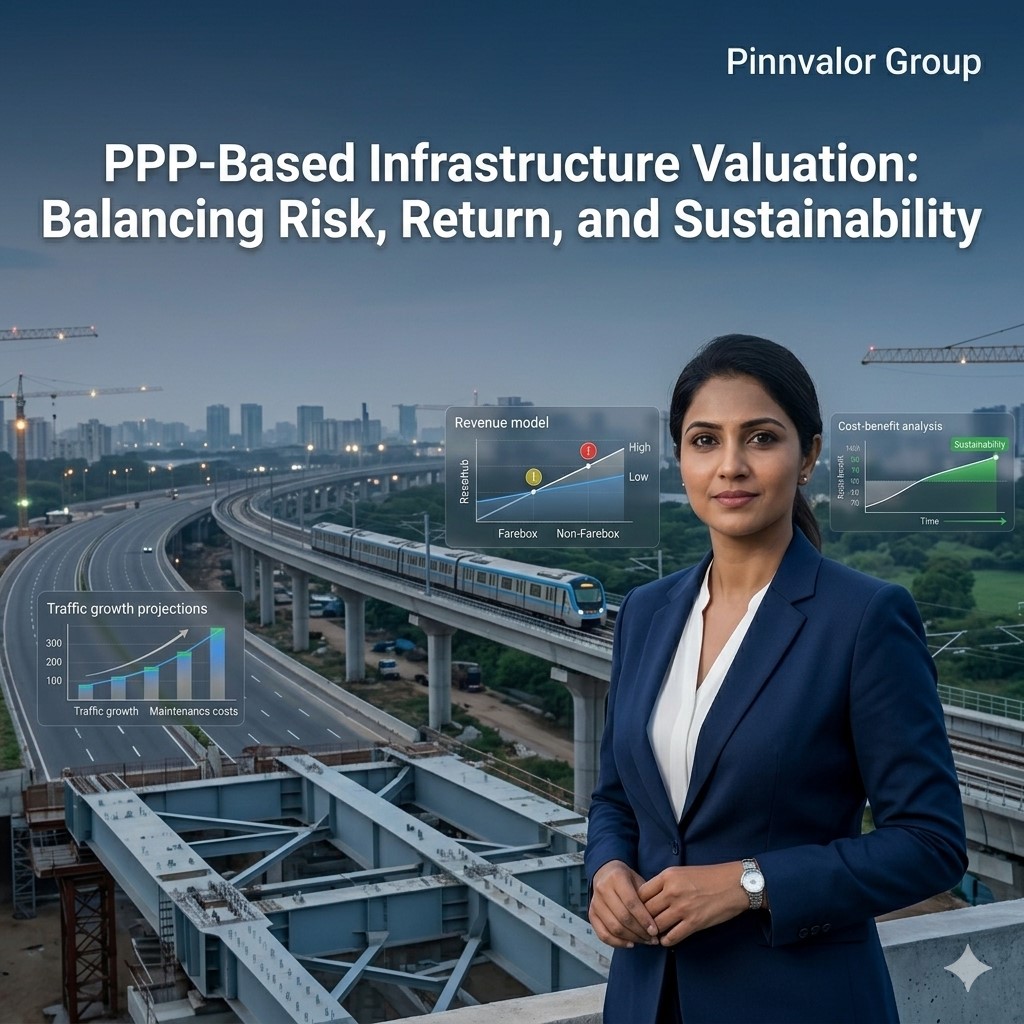
3. Discounted Cash Flow (DCF) Method
DCF is the most widely used valuation method, where future cash flows are discounted to present value using an appropriate discount rate.
4. Risk Assessment
- Construction risk
- Demand/traffic risk
- Regulatory and political risk
- Financial risk
Balancing Risk and Return
A critical aspect of PPP valuation is ensuring that risks are allocated to the party best capable of managing them.
- Risk Sharing: Proper allocation enhances project efficiency and reduces overall cost.
- Return Expectations: Private investors expect returns commensurate with risk exposure.
- Government Support: Mechanisms like guarantees and subsidies help balance risks.
Incorporating Sustainability in Valuation
Modern infrastructure valuation extends beyond financial metrics to include environmental and social considerations.
- Environmental Sustainability: Reducing carbon footprint and promoting green infrastructure.
- Social Impact: Enhancing accessibility, employment, and community development.
- Governance: Transparency, accountability, and regulatory compliance.
Challenges in PPP-Based Valuation
- Uncertainty in demand forecasting
- Policy and regulatory changes
- Financing constraints
- Long project gestation periods
Best Practices for Effective Valuation
- Robust Financial Modeling: Use realistic assumptions and sensitivity analysis.
- Transparent Risk Allocation: Clearly define roles and responsibilities.
- Stakeholder Alignment: Ensure coordination between public and private entities.
- Sustainability Integration: Incorporate ESG factors into decision-making.
Conclusion
PPP-based infrastructure valuation is a strategic process that requires a holistic approach. By effectively balancing risk, return, and sustainability, stakeholders can ensure that projects are not only financially viable but also socially beneficial and environmentally responsible. As infrastructure demand continues to rise, mastering PPP valuation will be key to building resilient and future-ready economies.