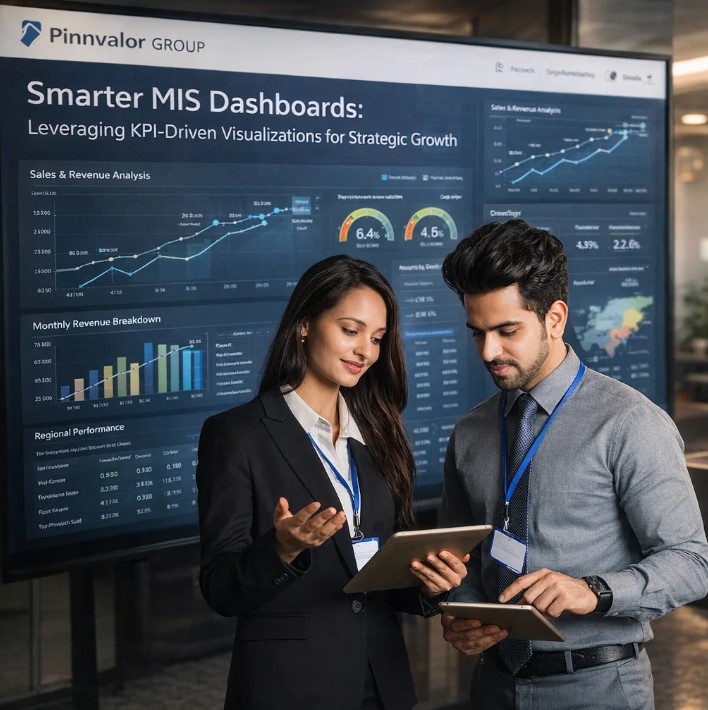
Smarter MIS Dashboards: Leveraging KPI-Driven Visualizations for Strategic Growth
In today’s data-driven business landscape, organizations are not short of data—they are short of clarity. Management Information Systems (MIS) dashboards have evolved from static reporting tools into dynamic decision-making enablers. However, the real value of a dashboard lies not in the volume of data it displays, but in how effectively it communicates Key Performance Indicators (KPIs).
What separates a good dashboard from a game-changing one?
The true power of dashboards lies in simplicity. The clearer the insight, the stronger the decision.
A well-designed KPI-driven MIS dashboard transforms complex datasets into clear, actionable insights, empowering leadership to make faster, smarter, and more strategic decisions.
What Makes an MIS Dashboard “Smart”?
A smart MIS dashboard is not just visually appealing—it is purpose-driven, user-centric, and insight-focused. It aligns closely with business objectives and answers critical questions:
- Are we meeting our targets?
- Where are the performance gaps?
- What actions should we take next?
Key Characteristics
- Clarity over complexity
- Real-time or near real-time insights
- Actionable metrics instead of raw data
- Customizable views for different stakeholders
- Integration across multiple data sources
The Role of KPIs in MIS Dashboards
KPIs are the backbone of any effective MIS dashboard. They act as performance signposts, guiding organizations toward their strategic goals.
Why KPI-Driven Dashboards Matter
- Focus attention on what truly matters
- Eliminate information overload
- Enable performance tracking against targets
- Drive accountability across teams
- Support proactive decision-making
Examples of KPIs Across Functions
- Finance: EBITDA margin, cash flow, working capital cycle
- Sales: Conversion rate, revenue growth, average deal size
- Operations: Turnaround time, capacity utilization
- HR: Employee productivity, attrition rate
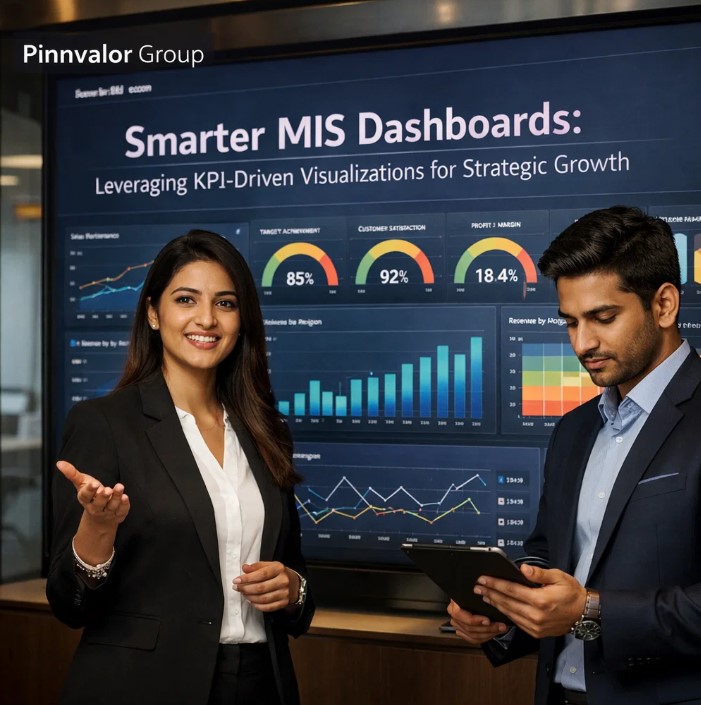
Design Principles for KPI-Driven MIS Dashboards
1. Start with Business Objectives
Every dashboard should begin with a clear understanding of organizational goals. KPIs must directly align with these objectives.
If a KPI doesn’t influence a decision, it doesn’t belong on the dashboard.
2. Prioritize the Right KPIs
Focus on selecting meaningful KPIs:
- Leading indicators (predict future performance)
- Lagging indicators (reflect past performance)
- A balanced mix of both
3. Choose the Right Visualizations
- Line charts – Trends over time
- Bar charts – Comparisons
- Pie charts – Proportions (use sparingly)
- Heatmaps – Patterns and intensity
- Gauge charts – Target vs actual performance
4. Emphasize Simplicity and Clarity
- Use minimal colors and consistent formatting
- Highlight key insights using contrast
- Avoid clutter and unnecessary elements
A clean dashboard improves comprehension and decision speed.
5. Enable Interactivity
- Drill down into detailed data
- Filter by time, region, or segment
- Customize views based on roles
6. Ensure Data Accuracy and Timeliness
- Strong data governance
- Automated data pipelines
- Regular validation checks
Common Pitfalls to Avoid
- Overloading with Data: Too many KPIs dilute focus
- Ignoring User Needs: Lack of user-centric design
- Poor Visualization Choices: Misleading chart types
- Lack of Context: Missing benchmarks or targets
Transforming Dashboards into Strategic Tools
- Link KPIs to strategic initiatives
- Incorporate predictive analytics
- Use AI-driven insights for anomaly detection
- Align with performance management systems
The Future of MIS Dashboards
- AI-powered and predictive
- Highly personalized
- Integrated with automation tools
- Real-time and mobile accessible
Conclusion
MIS dashboards are no longer just reporting tools—they are strategic assets. By leveraging KPI-driven visualizations, businesses can cut through the noise, focus on what matters, and drive meaningful growth.
A smart dashboard doesn’t just tell you what happened—it helps you understand why it happened and what to do next.
Final Thought
“The true power of an MIS dashboard lies not in displaying data, but in delivering decisions.”